

Creating Space: How the Palouse Inspires Rest in Our Spiritual Journey
"The right path in our spiritual formation is making sure we take time to pause and rest."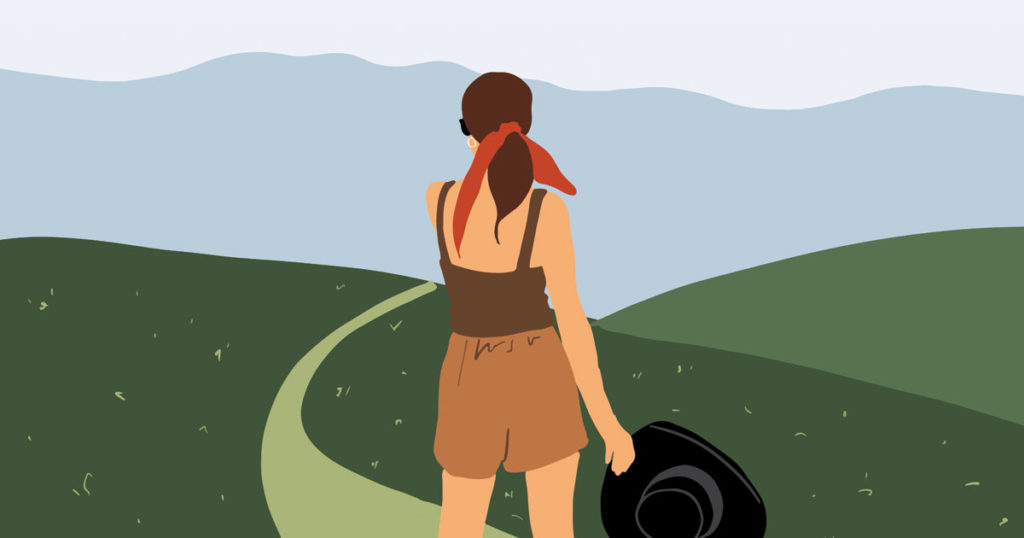
The southeastern portion of the state of Washington is home to one of the most unique places on the planet: the “Palouse.” Because of its incredible beauty and unique geographical features, the Palouse is often considered one of the “seven natural wonders of Washington.” The name is derived from the original Native American inhabitants, the Palus tribe, and was likely adapted by French-Canadian fur traders into the French word “pelouse,” meaning “land with short, thick grass.”
In this vast space lies both fertile and rugged land. The rolling hills create a picturesque setting of rich farmland and distinctive topography. The Palouse is known for its production of wheat, cannoli seed, garbanzo beans (chickpeas) and barley. A good majority of the wheat produced in this region is hauled by trains to western ports and eventually shipped around the world.
Driving east towards the Palouse, you immediately notice the absence of mountains and are then taken back by the amount of open sky. In front of you are hundreds of miles of rolling hills that are filled with dry farming. The area comes alive with the spring rain. The winter wheat grows quickly to full maturity under the brilliant sky and is eventually harvested towards the end of summer.
For the adventurous person, one can either hike or ride a bicycle on the trail known as the “Palouse to the Cascades” that stretches along the old Northern Rail line for hundreds of miles.
The vastness of the physical space is captivating. You can literally catch your breath looking at what lies out upon the horizon. It’s as if the supernatural work of God is seen in full array upon the natural order of the land. The amount of open space does something to your soul.
The contrast is the lack of space, which is a harsh daily reality for many. So often we walk about in crowded spaces. This doesn’t always refer to our physical surroundings, but that can play into it. Overcrowding may come in the form of cluttering up our personal calendars. At times, that can’t be helped, but admittedly, there can be more effort made for intentionality to create space to breathe and to think.
Technology also has invaded our personal space so much now that we can feel we are always on, always available, always accessible. This can lead to feelings of vulnerability and exhaustion mentally and physically. It can nearly become impossible to think clearly, not to mention almost zero time to pause and reflect. All due to a lack of space in our lives.
My wife and I are going through a purging of sorts as we both prepare for a significant transition in our lives. After more than 40 years of service as active Salvation Army officers, we are set to retire this summer. We are faced with the natural downsizing of possessions, which means off-loading most of my library and clothes that no longer fit. The process is therapeutic in a way as we look forward to the life ahead, but at the same time, it gives us space to look back at what has been.
The backward look gives us time to reflect on the testament of the faithfulness of God and the divine movement He has played in the journey of our lives. Taking time to reflect is key to our own spiritual growth and maintaining vitality.
The story is told in the Old Testament of how the prophet Jeremiah responded when the city of Jerusalem was under siege. Jeremiah was called by God to speak words to the citizens of the city who were in absolutely no mood to hear what he had to say. During the chaos, Jeremiah basically was calling out the people of Jerusalem to stop and pause.
Life was busy, full to the brim with constant activity, which led to worries, doubt and fatigue. Panic set in as invaders disrupted the natural order of their lives. Jeremiah’s call was very simple: remember the words of the prophets of old. Recall the commandment to rest. Create some space in your lives. Reflect. Think. Pray.
“Go stand at the crossroad and look around. Ask for directions to the old road, the tried-and-true road. Then take it. Discover the right route for your souls” (Jeremiah 6:16a The Message).
Sounds like a good plan, doesn’t it? Heeding the advice of a prophet of God. Pausing. Looking around to gather one’s bearings. But no. “But they said, ‘Nothing doing. We aren’t going that way’” (Jeremiah 6:16b The Message).
They knew better than to stop what they were doing. It’s as if they were saying, “We have no time to rest. We must work while we have time. We must hustle. We must race. We must go! Can’t you see our world is collapsing?”
We don’t need to crowd our lives with constant activity that creates a sense of self-importance. That only leads to personal chaos and confusion when the balance is off. Problems always exist. But finding solutions calls for clear thinking and godly responses, that comes when we create space to be able to think clearly and keep our bodies in check.
The right path in our spiritual formation is making sure we take time to pause and rest. The fourth commandment is often overlooked: “Remember the Sabbath day by keeping it holy” (Exodus 20:8 NIV). Sabbath keeping has always been embattled by some in a legalized manner of effort. Others simply choose to ignore it.
The fact remains: God encouraged human beings to rest. We must remind ourselves that we are not machines. There is a need to avoid hurried lives and find time for worship and rest.
Yet so often we seem to know a better way than what God has provided for us. The supernatural expression of creating space in our lives is when we realize that God made space for us to rest. We must seize it. He reminds us that we rest to work and not the other way around.
Enjoy the unhurried approach to life and the space God’s created for you.
How to Find Rest in the Midst of Life’s Chaos
Photo: rosshelen/Getty Images | This article was originally titled “Creating Space: The Pursuit of Rest in Our Spiritual Journey” in the March 2026 issue of The War Cry.